

304 vs 316 Stainless Steel: What’s the Difference and Which One Should You Choose?
A complete technical comparison between 304 stainless steel and 316 stainless steel. Learn about their chemical composition, corrosion resistance, mechanical properties, and ideal industrial applications to help you choose the right grade for your project.
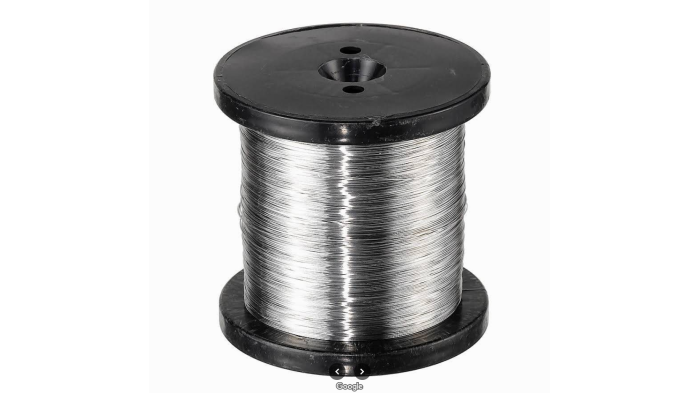
304 vs 316 Stainless Steel: What’s the Difference and Which One Should You Choose?
Stainless steel is one of the most versatile materials used in modern industry, offering a balance of strength, durability, and corrosion resistance. Among the many available grades, 304 stainless steel and 316 stainless steel are the most commonly used. Although similar in appearance and properties, their subtle differences can have a significant impact on performance, particularly in demanding environments.
Chemical Composition and Alloying Elements
The key distinction between 304 and 316 stainless steel lies in their chemical composition. Both belong to the austenitic family and contain chromium and nickel as primary alloying elements, but 316 includes an additional component — molybdenum — which enhances corrosion resistance.
| Element | 304 Stainless Steel | 316 Stainless Steel |
|---|---|---|
| Chromium (Cr) | 18–20% | 16–18% |
| Nickel (Ni) | 8–10.5% | 10–14% |
| Molybdenum (Mo) | — | 2–3% |
| Carbon (C) | ≤ 0.08% | ≤ 0.08% |
| Manganese (Mn), Silicon (Si), Phosphorus (P), Sulphur (S) | Trace amounts | Trace amounts |
The addition of molybdenum in 316 stainless steel improves its resistance to chlorides and acidic environments, making it more suitable for marine and chemical applications. In contrast, 304 stainless steel is sufficient for most indoor and general industrial uses.
Mechanical and Physical Properties
From a mechanical standpoint, 304 and 316 stainless steel share many similarities. Both grades are non-magnetic in the annealed condition, highly formable, and easily weldable. However, slight variations exist in their strength and temperature tolerance.
| Property | 304 Stainless Steel | 316 Stainless Steel |
|---|---|---|
| Tensile Strength (MPa) | ~520 | ~515 |
| Yield Strength (MPa) | ~215 | ~205 |
| Elongation (%) | ~45 | ~40 |
| Density (g/cm³) | 8.00 | 8.03 |
| Melting Point (°C) | 1400–1450 | 1375–1400 |
Both grades maintain good performance across a wide temperature range. However, 316 stainless steel retains slightly better mechanical stability in elevated temperature and high-humidity conditions, which explains its preference in chemical and offshore environments.
Corrosion Resistance and Environmental Performance
The most important difference between the two grades is their resistance to corrosion.
304 Stainless Steel
-
Excellent general corrosion resistance in normal atmospheric and freshwater environments.
-
Performs well against oxidation and mild chemicals.
-
Not recommended for environments with high chloride exposure, such as seawater or coastal areas, as it may experience pitting corrosion over time.
316 Stainless Steel
-
Contains molybdenum, providing superior resistance to chlorides and saline environments.
-
More resistant to acids, alkalis, and industrial solvents.
-
Ideal for use in marine, chemical, and food processing industries.
In simple terms, 316 stainless steel outperforms 304 when it comes to harsh or corrosive conditions, while 304 remains the more economical choice for standard applications.
Variants: 304L vs 316L
Both grades are also available in low-carbon versions, designated by the “L” suffix.
What Does the “L” Mean?
The “L” indicates low carbon content, reducing the risk of carbide precipitation during welding. This ensures better corrosion resistance at weld joints and simplifies fabrication.
-
304L stainless steel is ideal for components that require heavy welding but do not face extreme chemical exposure.
-
316L stainless steel combines excellent weldability with exceptional corrosion resistance, making it the preferred choice in pharmaceutical, food, and chemical processing sectors.
Typical Applications
304 Stainless Steel
Commonly used across a broad range of industries for its versatility and cost-efficiency:
-
Industrial equipment and machinery
-
Storage tanks and piping
-
Architectural and decorative components
-
Food processing and catering equipment
316 Stainless Steel
Selected for its enhanced corrosion and chemical resistance:
-
Marine fittings, boat rails, and offshore structures
-
Chemical and pharmaceutical processing equipment
-
Heat exchangers and pressure vessels
-
Medical instruments and implants
When deciding between the two, consider both the operating environment and the cost-performance ratio. For general indoor use, 304 stainless steel offers excellent value. For harsher or saline conditions, 316 stainless steel ensures longer service life and reduced maintenance.
Cost Considerations
Because of its higher nickel and molybdenum content, 316 stainless steel is typically 10–20% more expensive than 304. However, this initial cost can be offset by longer lifespan and reduced corrosion-related maintenance in demanding applications.
For buyers focused on durability and reliability in harsh conditions, 316 often proves more economical in the long run. Conversely, for projects where corrosion is minimal, 304 provides a cost-effective solution without compromising on quality.
Conclusion
Both 304 stainless steel and 316 stainless steel deliver excellent performance across a wide range of industrial uses. The right choice ultimately depends on your application environment:
-
Choose 304 for general-purpose and indoor industrial applications.
-
Choose 316 for marine, chemical, or high-chloride environments requiring superior corrosion resistance.
To explore suitable wire, rod, or cable options, Visit our website stainless-wire and explore our product categories for 304 stainless steel and 316 stainless steel ,including dedicated pages for Stainless steel 304 and Stainless steel 316 materials designed for industrial use.
FAQ
What is the main difference between 304 and 316 stainless steel?
The key difference lies in the addition of molybdenum in 316 stainless steel, which significantly improves corrosion resistance, especially against chlorides and marine environments.
Which is better for marine applications — 304 or 316?
316 stainless steel is the preferred choice for marine and coastal environments due to its enhanced resistance to saltwater and pitting corrosion.
What are 304L and 316L stainless steels used for?
The “L” versions have lower carbon content, making them better suited for welded structures. 304L is ideal for general welded fabrications, while 316L is recommended for chemical, food, and pharmaceutical equipment exposed to aggressive cleaning agents.